
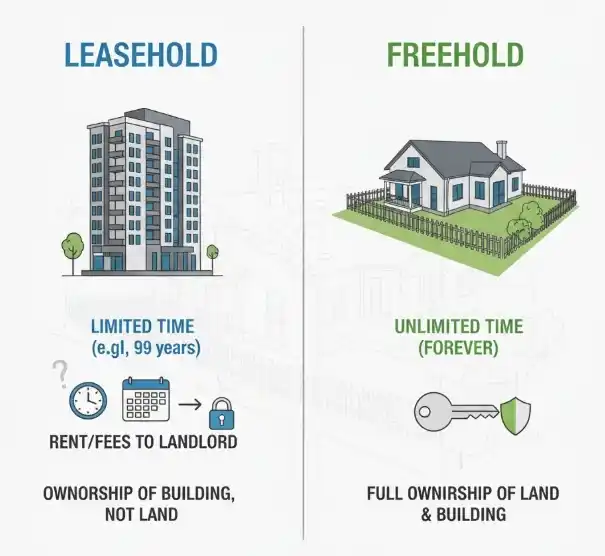
Leasehold vs Freehold Bali is one of the most important topics for foreign investors considering property ownership on the island. Bali’s real estate market offers strong rental yields and lifestyle appeal, but understanding the differences between leasehold and freehold ownership is essential to making the right investment decision. Each option comes with distinct legal structures, benefits, and risks that directly affect long-term value and return on investment.
As Bali continues to attract international buyers, clarity around ownership models has become increasingly critical, especially for those new to the Indonesian property market.
What Is Leasehold Ownership in Bali?
In the Leasehold vs Freehold Bali discussion, leasehold ownership is the most common option available to foreign buyers. Leasehold allows an individual to control and use a property for a fixed period, typically ranging from 25 to 30 years, with options to extend. Leasehold properties are popular because they:
- Require lower initial capital compared to freehold
- Offer strong rental income potential
- Are legally accessible to foreigners
- Provide flexibility for medium- to long-term investment strategies
Many investors choose leasehold properties to generate rental income during the lease period while benefiting from lower entry costs and faster ROI. For buyers exploring villas in Bali, leasehold ownership is often the most practical option due to its accessibility and rental flexibility.
What Is Freehold Ownership in Bali?
Freehold ownership, known locally as Hak Milik, represents full ownership of land and property. In the Leasehold vs Freehold Bali comparison, freehold is generally considered the most secure and permanent form of ownership.
However, freehold property is legally restricted to Indonesian citizens. Foreign buyers can only access freehold ownership through specific legal structures, such as establishing a local company, which comes with additional regulatory and operational requirements. Freehold ownership is often associated with:
- Long-term capital preservation
- Higher resale value
- Full control over land use
- Increased legal complexity for foreigners
As a result, freehold is typically more suitable for large-scale investors or buyers with long-term business interests in Indonesia.

Leasehold vs Freehold Bali: Key Differences Explained
Understanding Leasehold vs Freehold Bali comes down to several core distinctions:
- Duration: Leasehold ownership is time-limited, while freehold provides indefinite ownership.
- Accessibility for Foreigners: Leasehold is straightforward and commonly used by foreign investors, whereas freehold requires corporate structures or local partnerships.
- Investment Cost: Leasehold properties generally have lower purchase prices, making them more accessible for first-time investors.
- Risk Profile: Leasehold carries renewal risk at the end of the lease term, while freehold offers higher long-term security.
- These differences highlight why the choice depends heavily on investment goals, risk tolerance, and time horizon.
Investment Perspective: Leasehold vs Freehold Bali
From an investment standpoint, Leasehold vs Freehold Bali is not about which option is better universally, but which aligns best with your strategy.
Leasehold properties often deliver stronger short- to medium-term returns due to lower acquisition costs and high rental demand. Many investors achieve attractive annual yields by focusing on leasehold villas or modern residences in high-demand locations.
Freehold properties, on the other hand, are better suited for long-term appreciation and wealth preservation. While initial costs and legal requirements are higher, freehold assets tend to retain value and offer greater flexibility over time.
Market Growth and Ownership Trends in Bali
The evolving property market plays a key role in the Leasehold vs Freehold Bali debate. As tourism recovers and lifestyle migration increases, demand for both ownership types continues to rise. Notably, property company Bali sees rising demand as market expands, supported by growing interest from international buyers and improved infrastructure.
This growth has encouraged developers to offer more transparent lease terms and longer extensions, reducing uncertainty for leasehold investors. At the same time, freehold properties remain highly sought-after due to their limited availability.

Legal Considerations When Choosing Leasehold vs Freehold Bali
Legal due diligence is critical when navigating Leasehold vs Freehold Bali. Lease agreements must clearly outline extension rights, usage terms, and transferability. For freehold acquisitions via corporate structures, compliance with Indonesian regulations is essential.
Working with an experienced property agent Bali helps investors:
- Verify land titles and permits
- Structure ownership legally
- Assess long-term risks
- Protect investment value
Professional guidance significantly reduces exposure to legal complications and unexpected costs.
Which Option Is Right for You?
Choosing between Leasehold vs Freehold Bali depends on your objectives. Leasehold is ideal for investors seeking rental income, lower entry costs, and manageable timeframes. Freehold suits buyers focused on legacy assets, long-term appreciation, and full ownership control. Both options can be profitable when aligned with the right strategy, location, and professional support.
Conclusion: Leasehold vs Freehold Bali in 2025
Leasehold vs Freehold Bali remains a central consideration for property buyers in 2025. With a growing market, evolving regulations, and strong international demand, both ownership models offer viable opportunities. Understanding their differences allows investors to make informed, confident decisions that match their financial and lifestyle goals.
For more information, contact WhatsApp (+62) 812-1233-3590 (Maria) or email sales@arlion.co.id.